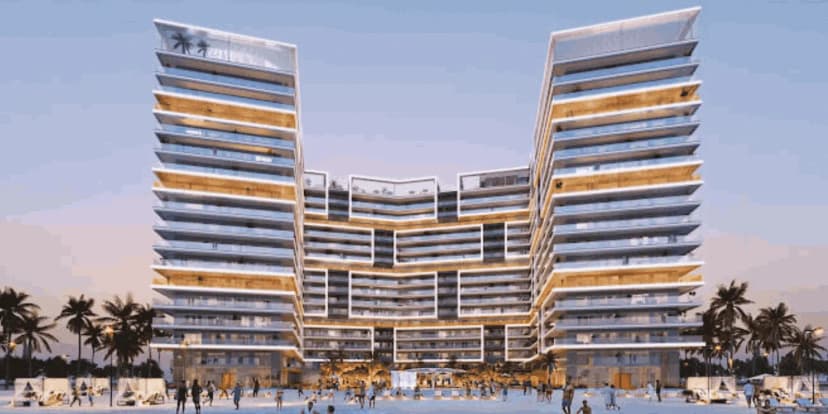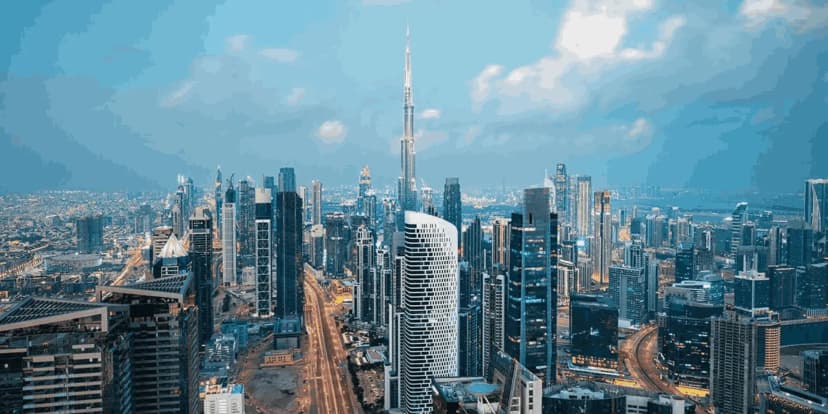

Dubai real estate market has emerged as one of the most lucrative investment destinations globally, attracting both institutional and individual investors seeking stable returns and capital appreciation in tax-free environment. The emirate recorded exceptional performance throughout 2025, with property transactions exceeding two hundred fifty thousand deals valued at over eight hundred fifty billion AED, demonstrating unprecedented market liquidity and investor confidence across all segments. The attraction to invest in Dubai real estate stems from multiple compelling factors including zero property taxes and zero capital gains taxes maximizing net returns, strong rental yields ranging from five to eight percent annually across different property types, and investor-friendly regulations allowing one hundred percent foreign ownership in designated freehold areas. Dubai strategic location as global business hub connecting Europe, Asia, and Africa, combined with world-class infrastructure including state-of-the-art transportation networks and modern utilities, creates ideal conditions for long-term property appreciation. The government Golden Visa program offering ten-year residency for property investments above two million AED provides additional incentive for international investors seeking stable residency options while building wealth through real estate portfolio in one of world most dynamic cities.
Investment Property Types and High-ROI Locations
When planning to invest in Dubai real estate, investors typically evaluate three primary property categories, each offering distinct return profiles and risk characteristics. Residential apartments represent the most liquid investment option, featuring studio, one-bedroom, two-bedroom, and three-bedroom units in high-rise towers with modern amenities and facilities. These properties deliver consistent rental income with average yields between five to seven percent annually, attract diverse tenant pool including professionals and expatriate families, and offer relatively lower entry points starting from five hundred thousand AED for studio units in emerging areas. Prime residential locations include Dubai Marina offering waterfront lifestyle with yacht clubs and beach access, Downtown Dubai featuring proximity to Burj Khalifa and Dubai Mall with premium tenant demand, and Business Bay providing mix of residential and commercial spaces with strong rental yields. Off-plan properties present opportunities for capital appreciation during construction phase, allowing investors to purchase directly from developers at pre-launch prices often ten to twenty percent below completed unit values. Payment plans for off-plan investments typically require twenty to thirty percent down payment with remaining balance spread over construction period, reducing immediate capital requirement while securing future appreciation. Popular off-plan projects launched in 2025 include developments in Dubai South near Expo City, Dubai Creek Harbour offering waterfront living near Downtown, and Jumeirah Village Circle providing affordable family-oriented communities. Commercial properties including retail shops, office spaces, and warehouses cater to investors seeking higher returns through business tenancies, with commercial rental yields averaging seven to ten percent annually in prime locations. Key commercial investment zones feature Business Bay as emerging business district with growing office demand, Dubai Marina offering retail spaces benefiting from tourist traffic, and Jumeirah Lake Towers abbreviated as JLT presenting mixed-use developments with office and residential components. Location selection critically impacts investment returns and tenant demand throughout holding period. Dubai Marina stands as mature waterfront community offering stable rental yields between six to seven percent annually, strong demand from international tenants and tourists, and excellent amenities including beach access, restaurants, and entertainment options. Average property prices in late 2025 ranged from one thousand eight hundred to two thousand two hundred AED per square foot depending on tower quality and view. Downtown Dubai represents premium investment destination commanding highest rents in emirate, featuring iconic landmarks including Burj Khalifa and Dubai Mall driving consistent tenant interest. Properties here deliver rental yields around five to six percent with strong capital appreciation potential due to limited new supply and sustained demand. Business Bay offers compelling value proposition for investors seeking balanced returns, with newer towers providing modern amenities and competitive pricing. Rental yields average six point five to seven point five percent, supported by growing business district status and proximity to Downtown Dubai. Investors purchasing properties worth over two million AED qualify for Dubai Golden Visa program, providing ten-year residency for investor and immediate family members, eliminating continuous visa renewal requirements and offering long-term stability for international investors building wealth in UAE.
Legal Framework Financing Options and Ownership Regulations
Investing in Dubai real estate requires understanding legal and financial framework governing property transactions and ownership rights. Foreign investors can purchase freehold properties in designated areas with complete ownership rights including land and building, no restrictions on resale or rental activities, and full inheritance rights allowing property transfer to heirs. Major freehold zones include Dubai Marina, Palm Jumeirah, Downtown Dubai, Business Bay, Dubai Hills Estate, Arabian Ranches, and Jumeirah Village Circle, representing majority of areas where international investors actively purchase. Initial investment costs encompass several mandatory fees that must be factored into total acquisition budget. Dubai Land Department fees total four percent of property purchase price paid during transfer, trustee fees of four thousand AED cover administrative processing for properties above five hundred thousand AED, real estate agency commission averages two percent of purchase price paid to buyer agent, and property valuation fee of approximately two thousand five hundred AED is required for mortgage applications. Financing options in Dubai provide flexibility for investors with varying capital availability. Local banks offer mortgage facilities up to seventy percent of property value for expatriate investors purchasing first property, with loan-to-value ratio reduced to sixty percent for second property and fifty percent for off-plan purchases still under construction. Mortgage eligibility requires stable employment or business income, clear credit history in UAE or home country, and debt-burden ratio not exceeding fifty percent of gross monthly income. Mortgage-related costs include bank processing fee ranging from zero point two five to one percent of loan amount, mortgage registration fee of zero point two five percent paid to Dubai Land Department, and life insurance premium typically one percent of loan value annually. International investors without UAE residency can secure mortgages but face stricter lending criteria including larger down payment requirements, higher interest rates compared to residents, and comprehensive income documentation from home country. Alternative financing through developer payment plans reduces immediate capital requirements, with many projects offering post-handover payment plans extending two to five years after completion, allowing investors to generate rental income while completing payments. Ongoing investment costs after property acquisition must be incorporated into return calculations. Annual service charges vary by community and building, typically ranging from eight to twenty-five AED per square foot depending on amenities and facilities provided. Utilities including electricity, water, and cooling are paid directly by landlord if property remains vacant or recovered from tenant through rental agreement. Property management fees average five to ten percent of annual rental income if using professional management services, plus municipal housing fees of five percent of annual rent paid by tenants but often factored into competitive rental pricing. Understanding taxation benefits distinguishes Dubai from many global property markets. Zero property taxes eliminate annual ownership costs present in most countries, zero capital gains tax allows investors to retain full profit from property appreciation upon sale, and zero income tax means rental income remains completely tax-free in UAE, though investors must consider tax obligations in their home country.
Investment Strategy ROI Calculation and Market Entry Timing
Successful real estate investment in Dubai requires strategic approach combining market analysis, financial planning, and timing considerations. Buy-to-let strategy focuses on generating steady rental income through long-term tenant relationships, targeting property types with strong rental demand such as one-bedroom and two-bedroom apartments, selecting locations near business districts and metro stations ensuring consistent tenant interest, and maintaining properties to high standards justifying premium rents and reducing vacancy periods. Expected returns from buy-to-let investments in prime locations average five to seven percent annual rental yield, plus capital appreciation of three to five percent annually based on historical trends, creating total return potential of eight to twelve percent before costs. Capital appreciation strategy targets properties in emerging areas with development potential, focusing on off-plan purchases in growth corridors, new master-planned communities with upcoming infrastructure, and areas benefiting from government mega-projects such as Expo City expansion. This strategy requires longer holding periods typically five to ten years but can deliver substantial returns as neighborhoods mature and infrastructure develops. Short-term rental strategy through platforms generates higher income compared to traditional leases in tourist-heavy locations, with properly managed vacation rentals in Dubai Marina or Palm Jumeirah achieving rental yields of eight to twelve percent annually. This approach requires more active management, furnishing investments, and compliance with Dubai tourism regulations including obtaining proper licensing. Calculating realistic ROI helps investors evaluate opportunities and compare different properties objectively. Gross rental yield equals annual rental income divided by property purchase price multiplied by one hundred, providing quick comparison metric across properties. Net rental yield accounts for operating costs by subtracting annual service charges, maintenance reserves, property management fees, and vacancy allowance from gross rental income before dividing by total investment including purchase price and acquisition costs. For example, property purchased at one million five hundred thousand AED generating one hundred five thousand AED annual rent with twenty-five thousand AED total operating costs delivers net yield of five point three percent. Cash-on-cash return measures return on actual invested capital for leveraged purchases, calculated as annual net rental income minus mortgage payments divided by down payment and closing costs. This metric proves particularly valuable when comparing leveraged versus all-cash purchases. Market entry timing significantly influences investment returns and risk exposure. Favorable buying conditions emerge during summer months from June through August when demand traditionally softens and sellers become more negotiable, end of year periods when owners seek to close transactions before new calendar year, and during global economic uncertainty when motivated sellers offer competitive pricing. Indicators suggesting good entry timing include increasing transaction volumes showing market liquidity, stable or declining rental yields suggesting property prices rising faster than rents and potential correction ahead, and major infrastructure announcements creating long-term appreciation potential in specific areas. Investors should avoid emotional decisions based solely on price drops without analyzing underlying fundamentals and should focus on properties with strong rental demand fundamentals regardless of short-term market fluctuations. Due diligence checklist ensures comprehensive evaluation before committing capital. Verify ownership through official Dubai Land Department records confirming clear title, check building quality by inspecting construction standards and developer reputation especially for off-plan purchases, analyze rental market by researching comparable properties and actual achieved rents in specific building or community, and review service charges and community fees ensuring they align with typical rates and do not erode investment returns.
The opportunity to invest in Dubai real estate remains compelling in 2025 and beyond, supported by strong economic fundamentals, transparent regulatory framework, and government commitment to infrastructure development and business-friendly policies. Dubai continues attracting global investors seeking tax-efficient wealth creation through property ownership combined with lifestyle benefits and residency options. Success in Dubai real estate investment requires thorough market research, realistic financial planning accounting for all costs, and strategic property selection aligned with investment objectives and risk tolerance. At Grand Vision Real Estate, we provide comprehensive investment advisory services covering market analysis, property sourcing, transaction management, and ongoing portfolio support, ensuring your real estate investments deliver optimal returns while navigating local market dynamics and regulatory requirements. Contact our investment team today to explore available opportunities matching your investment criteria, budget parameters, and long-term wealth creation goals in Dubai thriving property market.