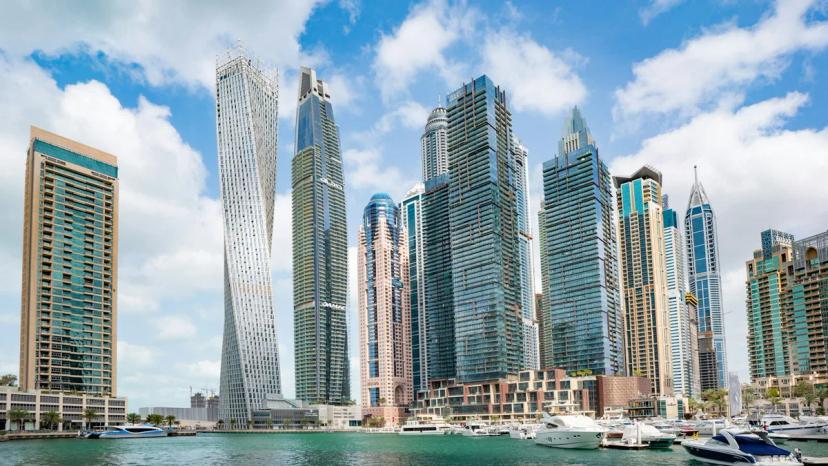
Buying property in Dubai through an off-plan payment plan can make property ownership more accessible by allowing buyers to divide the purchase price into scheduled payments. Among the available structures, the 20/80 payment plan in Dubai is one option that attracts buyers who want to keep their initial financial commitment relatively low while having time to prepare for the final payment.
Under a typical 20/80 payment plan, buyers pay 20% of the property's purchase price before handover, usually when booking the unit. The remaining 80% is payable when construction is completed and the developer issues the handover notice.
This arrangement can provide flexibility during the construction period, particularly for buyers who prefer not to make regular installment payments. However, the large final payment also requires careful financial planning. Buyers must understand how they will settle the remaining balance, whether through savings, mortgage financing, or other available funds.
Dubai offers a range of off-plan developments with different payment structures, locations, prices, and completion schedules. Understanding these differences can help investors compare opportunities and choose a property that aligns with their financial capacity and long-term objectives.
This guide explains how the 20/80 payment plan works, highlights selected off-plan projects, discusses its benefits and risks, and compares it with other common payment structures in Dubai.
Key Takeaways
- A typical 20/80 payment plan requires 20% of the purchase price before handover and 80% when the property is completed.
- The 4% Dubai Land Department (DLD) registration fee is an additional expense and should be included in the initial budget.
- A large final payment is the main financial consideration of this payment structure.
- Mortgage financing at handover may be an option, but approval and the amount available depend on the buyer's circumstances and applicable lending limits.
- Some developers require buyers to pay a minimum percentage of the property price before allowing resale or assignment.
- Buyers should compare the total property price, not just the initial down payment.
- Verify the developer, project registration, escrow account, payment schedule, and sales agreement before committing.
What Is a 20/80 Payment Plan in Dubai?
A 20/80 payment plan is an off-plan property payment structure in which the buyer pays 20% of the purchase price before handover and the remaining 80% when the property is completed.
The first number represents the portion paid before the property is handed over, while the second represents the outstanding balance due at completion.
For example, if you purchase an off-plan apartment for AED 1 million under a standard 20/80 arrangement, the payment structure would generally look like this:
- 20% before handover: AED 200,000
- 80% at handover: AED 800,000
Unlike payment plans that require installments throughout construction, a standard 20/80 arrangement may have no additional construction-stage payments after the initial booking amount.
However, payment structures can differ between developers and projects. Some may divide the initial 20% into a booking deposit and subsequent installment, while others may offer a different arrangement for the remaining balance.
Understanding the Difference Between 20/80 and 80/20
The naming of payment plans matters because 20/80 and 80/20 represent opposite payment structures.
| Payment Plan | Before Handover | At Handover |
|---|---|---|
| 20/80 | 20% | 80% |
| 80/20 | 80% | 20% |
Under a 20/80 plan, buyers make a smaller initial payment but face a larger balance at handover. Under an 80/20 plan, buyers pay a larger portion during construction and have a smaller outstanding balance when the property is completed.
Always review the actual payment schedule in the sales agreement rather than relying only on the plan's name.
How Does a 20/80 Payment Plan Work in Dubai?
A standard 20/80 payment plan generally follows three main stages: booking and initial payment, the construction period, and final payment at handover.
Understanding each stage helps buyers prepare their finances and avoid unexpected payment obligations.
1. Initial Booking Amount and Down Payment
The process begins when the buyer selects an off-plan property, reserves the unit, and signs the relevant sales and purchase agreement.
Under a typical 20/80 arrangement, the buyer pays 20% of the agreed purchase price at booking. Some developers may divide this amount into a reservation deposit and another installment, depending on the project's payment terms.
The contract is then registered with the Dubai Land Department through Oqood, which serves as the interim registration system for off-plan property sales.
The 4% DLD registration fee is generally payable in addition to the property's purchase price. Buyers should also account for any applicable developer administration fees.
Payments should be made through the designated project escrow account in accordance with the official payment instructions and contractual requirements.
2. Payments During Property Construction
One of the defining features of a standard 20/80 payment plan is that buyers may not have additional installments to pay during construction after completing the initial 20%.
This means buyers can retain more of their available funds while the developer works toward completing the property.
However, the absence of scheduled construction payments does not mean buyers can ignore the development's progress. It is important to monitor construction updates, review the contractual completion timeline, and prepare for the final payment well before handover.
Project escrow arrangements are also an important consideration. Buyers should verify the project's registration and designated escrow account through the relevant official channels.
3. Final Payment at Handover
The remaining 80% becomes payable when the developer completes the property and issues the handover notice, subject to the terms of the agreement.
Buyers commonly plan to settle this balance using:
- Personal savings.
- Mortgage financing, subject to bank approval.
- Proceeds from selling another property or asset.
- Other available financial resources.
The final payment is the most important financial obligation under a 20/80 structure. Buyers should not assume that a bank will automatically finance the entire outstanding amount.
After the required payments and registration procedures are completed, the buyer proceeds with the applicable title deed process. The Oqood registration transitions to title deed registration after payment, with smaller administrative charges rather than another 4% DLD registration fee.
The precise process and charges should be confirmed with the relevant authorities and service providers.
Example: AED 1 Million Property Under a 20/80 Payment Plan
The following example illustrates how the purchase price is divided under a standard 20/80 arrangement.
| Payment Stage | Percentage | Amount | When It Is Due |
|---|---|---|---|
| Booking | 20% | AED 200,000 | At reservation and signing |
| During construction | 0% | AED 0 | No installments under the standard example |
| Handover | 80% | AED 800,000 | Upon the developer's handover notice |
| Total | 100% | AED 1,000,000 |
In addition to the AED 200,000 initial payment, the buyer should budget for the 4% DLD registration fee.
For a property priced at AED 1 million:
- Initial payment: AED 200,000
- DLD registration fee at 4%: AED 40,000
- Initial amount: approximately AED 240,000, before applicable developer administration fees
This example demonstrates why buyers should calculate the total upfront cash requirement rather than focusing only on the advertised down payment.
Best Off-Plan Projects Offering 20/80 Payment Plans in Dubai
Dubai has a diverse selection of off-plan developments across different locations and price ranges. The projects below are examples of developments offering a 20/80 payment structure.
The starting prices and expected completion dates should be independently verified before making an investment decision. Availability and payment terms may change.
Expected Starting
| Project | Developer | Location | Handover | Price |
|---|---|---|---|---|
| Verdana III | Reportage | Dubai Investments Park | Q4 2027 | AED 544,000 |
| Sera Gardens | Vision Developments | Dubai Production City | Q2 2028 | AED 720,000 |
| Samana Waves | SAMANA | Jumeirah Village Circle | Q1 2027 | AED 904,000 |
| Riviera 66 | Azizi | Meydan | Q2 2027 | AED 1.24 million |
| Palatium Residence | Ahmadyar Developments | Jumeirah Village Circle | Q4 2026 | AED 1.36 million |
| La Cle | MAAIA Developers | Al Furjan | Q1 2027 | AED 1.81 million |
| Moor | Emaar | Dubai Creek Harbour | Q4 2026 | AED 1.84 million |
| Luxury Canal Residences | Prestige One | Dubai Islands | Q1 2028 | AED 2.79 million |
| Tomorrow 166 | Tomorrow World Real Estate Development | Dubai Islands | Q2 2027 | AED 4.05 million |
Affordable Off-Plan Options
Projects such as Verdana III, Sera Gardens, and Samana Waves are among the lower-priced examples.
Locations including Dubai Investments Park, Dubai Production City, and Jumeirah Village Circle provide options for buyers exploring properties below AED 1 million, based on the stated starting prices.
When comparing these developments, buyers should consider more than the initial price. Unit size, layout, location, developer track record, construction progress, service charges, and the complete payment schedule can all affect the property's overall suitability.
Mid-Range and Premium Developments
For buyers with larger budgets, developments such as Riviera 66, Palatium Residence, La Cle, and Moor offer examples of projects in different Dubai communities.
Luxury Canal Residences and Tomorrow 166 are among the higher-priced developments listed.
The right choice depends on the buyer's investment objectives, preferred location, available capital, expected holding period, and ability to settle the remaining 80% at handover.
Which Dubai Developers Offer 20/80 Payment Plans?
The 20/80 payment structure is not limited to one developer. Several established and emerging developers have projects using this arrangement.
Some of the developers and development companies mentioned include:
Azizi Developments
Azizi has projects in areas such as Meydan, Azizi Riviera, and Al Jaddaf. Riviera 66 is one example of a project with a 20/80 payment structure.
Emaar Properties
Emaar has developments across several Dubai communities, including Dubai Creek Harbour, Dubai Hills Estate, and Emaar Beachfront.
Moor, Cedar, and Park Horizon are among the developments associated with payment plans.
Reportage Properties
Reportage has developments in locations including Dubai Investments Park and Ras Al Khor. Verdana III is one of the projects listed.
Vision Developments
Vision Developments is associated with projects in Dubai Production City, Dubai Sports City, and Liwan.
Other Developers
Other points to note include:
- SAMANA Developers
- MAAIA Developers
- Madar Developments
- Tomorrow World Real Estate Development
- Credo Investments
- Ahmadyar Developments
- Prestige One
Payment terms are project-specific. A developer may offer different payment structures across its developments, and a 20/80 plan advertised for one project should not be assumed to apply to all its properties.
How to Verify a Developer and Project
Before booking an off-plan unit, confirm that the developer and project are registered with the Dubai Land Department and that the project has the required escrow account.
The Dubai REST app is one of the official channels for checking relevant project and developer information.
Buyers should also confirm the payment recipient and ensure that payments follow the official project instructions. Never rely solely on promotional material or informal payment requests.
Benefits of Buying Property in Dubai With a 20/80 Payment Plan
A 20/80 payment plan can be attractive to buyers who want a lower initial financial commitment and more time to organize their funds.
However, the benefits depend on the buyer's financial position and ability to meet the final payment obligation.
1. Lower Initial Financial Commitment
Paying 20% before handover can make the initial purchase commitment lower than payment structures that require a larger percentage during construction.
For buyers who have sufficient resources to cover the booking payment and associated fees, this may provide an opportunity to reserve an off-plan property while keeping more capital available.
2. No Regular Construction Installments Under a Standard Plan
A typical 20/80 arrangement may not require additional payments throughout the construction period after the initial 20%.
This can make financial planning more straightforward for buyers who prefer to organize their funds around the booking stage and final handover.
3. Time to Prepare for the Final Payment
The period between booking and completion gives buyers time to build savings, arrange financing, or prepare other assets for sale.
This flexibility can be useful, but it should not be confused with a reduction in the total purchase price. The outstanding 80% remains a contractual obligation.
4. Purchase Price Agreed at Signing
The purchase price is generally established in the sales and purchase agreement.
If market prices increase before the project is completed, the buyer's agreed contract price does not automatically increase simply because the market has changed.
However, this does not guarantee that the property will appreciate or that the buyer will earn a profit.
5. Payments Through a Project Escrow Account
Dubai's project escrow framework is an important consideration for off-plan buyers.
Project funds are held in designated escrow accounts, and developer access to funds is connected with project progress under the applicable rules.
Buyers should independently verify the project's registration and escrow details rather than assuming that every payment request is legitimate.
6. Options for International and Non-Resident Buyers
Designated freehold areas are locations where non-resident buyers may be able to purchase property.
Eligibility and ownership rights depend on the property's location and applicable regulations. International buyers should confirm the relevant requirements before making a purchase.
Risks and Additional Costs of a 20/80 Payment Plan
Although the 20/80 payment plan offers a relatively low initial payment, it also creates financial obligations that buyers must consider carefully.
The main concern is the outstanding 80% due at handover. Other costs, financing conditions, and resale restrictions can also affect the investment.
1. The Large Final Payment
The biggest risk is the requirement to settle 80% of the purchase price when the property is completed.
For a property worth AED 1 million, this means the buyer must arrange AED 800,000 at handover.
Buyers should prepare a realistic funding plan well before the expected completion date. Depending entirely on a future mortgage approval or the sale of another asset can create financial pressure if circumstances change.
2. Mortgage Financing Is Not Guaranteed
Mortgage financing may help buyers settle the final balance, but approval depends on the buyer's financial profile, the property, the bank's requirements, and applicable lending limits.
A 50% loan-to-value limit is referenced for off-plan property financing under the UAE Central Bank framework. It also explains that financing limits for completed properties can differ depending on factors such as residency status, property value, and whether the property is a first or subsequent purchase.
These limits and lending conditions should be checked against current Central Bank rules and the individual bank's requirements.
A buyer should not assume that a mortgage will automatically cover the full 80% due at handover.
3. Restrictions on Reselling Before Handover
Some developers require buyers to pay a minimum percentage of the purchase price before they can resell or assign an off-plan property.
In the projects discussed, 30% to 40% is a typical range. Under a standard 20/80 structure, a buyer who has paid only 20% may therefore be unable to resell before handover.
The actual resale or assignment conditions must be confirmed in the sales and purchase agreement.
4. Additional Registration and Administrative Fees
The advertised down payment is not the only initial expense.
Buyers should account for the following potential costs:
| Cost | Typical Amount or Basis | When It Is Paid |
|---|---|---|
| DLD registration fee | 4% of purchase price | At Oqood registration |
| Developer administrative fees | Varies by developer | At signing or as specified |
| Mortgage registration fee | 0.25% of the loan plus applicable administrative fee | At mortgage registration |
| Bank arrangement fee | Often around 1% of the loan | During mortgage approval |
| Property valuation | AED 2,500–3,500 | Before mortgage approval |
| Service charges | Set according to the project | After handover |
These figures are based on the supplied article and are not guaranteed quotations. Confirm current fees with the DLD, developer, bank, or relevant service provider before budgeting.
5. The Purchase Price May Reflect the Payment Structure
A low initial payment does not necessarily mean the property offers the best overall value.
Developers may price units differently depending on the payment structure, project, location, and market conditions.
Compare the total purchase price and contractual terms across similar properties rather than choosing a unit based only on its down payment.
6. Construction and Handover Considerations
Off-plan properties are purchased before completion, so buyers should understand the project's construction timeline and the contractual provisions relating to delays.
Review the expected handover date, the developer's obligations, and any applicable provisions for delays or default.
The buyer should also plan for property inspection, snagging, outstanding payments, and handover procedures.
20/80 vs. 50/50 vs. 60/40 vs. 80/20 Payment Plans in Dubai
Dubai developers offer different payment structures to accommodate buyers with different financial preferences.
The most important difference is how much of the purchase price must be paid before handover and how much remains outstanding at completion.
The following comparison uses an example property priced at AED 1 million.
| Payment Plan | Before Handover | At Handover | AED 1 Million Example |
|---|---|---|---|
| 20/80 | 20% | 80% | AED 200,000 + AED 800,000 |
| 50/50 | 50% | 50% | AED 500,000 + AED 500,000 |
| 60/40 | 60% | 40% | AED 600,000 + AED 400,000 |
| 80/20 | 80% | 20% | AED 800,000 + AED 200,000 |
20/80 Payment Plan
This structure requires the smallest pre-handover payment among the plans listed above.
It may suit buyers who want to preserve more available capital during construction and already have a credible strategy for settling the final balance.
50/50 Payment Plan
A 50/50 structure divides the purchase price more evenly between the period before handover and the completion stage.
It may appeal to buyers who prefer not to carry an especially large final payment.
60/40 Payment Plan
Under a 60/40 structure, buyers pay a larger share before handover, leaving 40% outstanding at completion.
This can reduce the final payment compared with a 20/80 plan, but it requires more capital during construction.
80/20 Payment Plan
An 80/20 structure requires buyers to pay most of the purchase price before handover.
The benefit is a smaller final balance, although buyers must have sufficient funds to meet the larger construction-stage commitment.
Which Payment Plan Is Better?
There is no single payment structure that is best for every buyer.
The 20/80 plan may be appropriate for someone with a reliable handover funding strategy. A 50/50 or 60/40 arrangement may be more manageable for buyers who prefer to spread their financial obligations. An 80/20 plan may suit those who can afford larger payments during construction and want a smaller balance at completion.
The right choice depends on cash flow, available savings, financing options, risk tolerance, and the contractual terms of the specific development.
Is a 20/80 Payment Plan a Good Option for Property Investors?
A 20/80 payment plan can be suitable for investors who want to secure an off-plan property with a smaller initial commitment and have a clear strategy for paying the remaining balance.
It may be less suitable for investors who expect to resell the property before handover, particularly if the developer requires a higher paid percentage before allowing assignment.
Before choosing this structure, investors should consider several important questions.
Can You Pay the Remaining 80% at Handover?
This should be the first question.
Calculate the outstanding amount and identify exactly how you intend to settle it. If you plan to use a mortgage, speak with banks early and understand the lending conditions that may apply when the property is completed.
Does the Developer Allow Resale Before Handover?
If your investment strategy depends on selling the property before completion, review the assignment conditions carefully.
Some developers require buyers to reach a specified payment percentage before resale is permitted. A 20% initial payment may not meet that requirement.
Is the Total Purchase Price Competitive?
Compare the property with similar units in the same community and nearby developments.
Consider the unit's size, location, layout, developer, expected completion date, and payment terms. A smaller down payment should not be the only factor influencing your decision.
Do You Intend to Rent the Property After Handover?
If your goal is rental income, research the potential rental market and estimate the costs associated with owning the property.
Consider service charges, maintenance, vacancy periods, property management, and other expenses. Rental income is not guaranteed, and projected returns should be treated as estimates rather than assured results.
Does the Investment Match Your Holding Period?
An off-plan property may require a longer investment horizon than some buyers initially expect.
Consider whether you are comfortable holding the property through construction and beyond handover, especially if resale restrictions or market conditions affect your ability to exit the investment.
How to Buy an Off-Plan Property With a 20/80 Payment Plan in Dubai
Buying an off-plan property requires more than selecting a development with an attractive payment structure. Buyers should review the project's registration, developer credentials, agreement, and payment arrangements before committing.
The following steps provide a practical overview.
Step 1: Establish Your Budget
Calculate the amount you can afford to pay at booking, including the 20% down payment and the 4% DLD registration fee.
You should also account for applicable administrative charges and prepare a separate funding plan for the remaining 80%.
Step 2: Select a Suitable Location and Development
Explore freehold communities and developments that match your budget and property requirements.
Compare the location, unit type, project facilities, accessibility, expected completion date, and the developer's background.
Step 3: Verify the Developer and Project
Check the developer and project through the relevant official DLD services, including the Dubai REST app.
Confirm that the project is registered and that the designated escrow account is valid.
Step 4: Review the Payment Schedule and Sales Agreement
Read the sales and purchase agreement carefully before signing.
Pay particular attention to:
- The booking amount and payment deadlines.
- The remaining balance due at handover.
- The expected completion and handover date.
- Conditions relating to construction delays.
- Resale and assignment restrictions.
- Default provisions and consequences of late payment.
- Any additional administrative or service charges.
Seek independent professional advice if any contractual term is unclear.
Step 5: Pay Through the Official Project Escrow Account
Follow the developer's official payment instructions and ensure that funds are transferred to the designated project escrow account.
Avoid unofficial payment requests or transfers to unrelated accounts.
Step 6: Complete Oqood Registration
Complete the applicable off-plan registration process and pay the required DLD fee.
Keep copies of the agreement, payment receipts, and registration documents for your records.
Step 7: Monitor Construction and Prepare for Handover
Follow project updates and maintain communication with the developer.
If you intend to use mortgage financing, begin discussions with banks well ahead of the expected completion date. This gives you time to understand eligibility, valuation, approval requirements, and the funds you may need to provide yourself.
Step 8: Settle the Remaining 80% and Complete Handover
When the developer issues the handover notice, follow the contractual process for settling the outstanding amount.
Inspect the property, document any issues that need attention, complete the applicable handover procedures, and obtain the relevant ownership documentation.
Frequently Asked Questions About the 20/80 Payment Plan in Dubai
1. What is a 20/80 payment plan in Dubai?
A 20/80 payment plan is an off-plan property payment structure in which the buyer pays 20% of the purchase price before handover and the remaining 80% when the property is completed.
2. Is the 20/80 payment plan available for off-plan properties?
Yes. Several Dubai off-plan developments are advertised with this structure. However, payment terms depend on the individual project and developer.
3. How much is the down payment for a 20/80 property?
The initial payment is generally 20% of the agreed purchase price. For a property priced at AED 1 million, this would be AED 200,000, excluding applicable registration and administrative fees.
4. Do I need to pay installments during construction?
Under a standard 20/80 plan, there may be no additional construction-stage installments after the initial 20%. However, some developers may divide the initial payment or offer modified schedules. Always check the actual agreement.
5. When is the remaining 80% payable?
The remaining 80% is generally due when the developer completes the property and issues the handover notice, subject to the contract.
6. Is the 4% DLD fee included in the 20% down payment?
No. The 4% DLD registration fee is generally an additional cost. Buyers should include it in their initial budget alongside the down payment and any applicable administrative fees.
7. Can I use a mortgage to pay the remaining 80%?
Mortgage financing may be available at handover, subject to the bank's approval, the buyer's financial circumstances, the property's valuation, and applicable lending limits. Full financing of the outstanding balance is not guaranteed.
8. Can I resell an off-plan property before handover?
Resale or assignment may be subject to developer conditions, including a minimum percentage of the purchase price that must be paid. In the projects discussed, 30% to 40% is a typical range. Check the specific agreement before relying on an early resale strategy.
9. What happens if I cannot pay the 80% at handover?
Failure to settle the outstanding balance may trigger the contractual default provisions and other applicable consequences. Review the agreement carefully and obtain professional advice if you are concerned about your ability to meet the payment deadline.
10. Which Dubai developers offer 20/80 payment plans?
Developers and development companies with projects using this structure include Azizi, Emaar, Reportage, Vision Developments, SAMANA, MAAIA Developers, Madar Developments, Tomorrow World, and Credo Investments. The payment structure must be confirmed for each specific project.
11. Is a 20/80 payment plan better than an 80/20 plan?
Neither is automatically better. A 20/80 plan requires less money before handover but leaves a larger final payment. An 80/20 plan requires more payments before completion but leaves a smaller balance at handover. The right choice depends on your available capital and financial strategy.
12. Is a 20/80 payment plan suitable for non-resident buyers?
Designated freehold areas are available to non-resident buyers. However, eligibility, financing, and ownership requirements should be confirmed for the specific property and buyer's circumstances.
13. What should I check before booking a 20/80 off-plan property?
Verify the developer and project registration, escrow account, payment schedule, DLD fees, handover timeline, resale provisions, and default clauses. Make sure you also have a realistic plan for settling the remaining 80%.
14. Does a 20/80 payment plan guarantee a good property investment?
No. A payment plan only determines how the purchase price is divided. Investment performance depends on factors such as the property's price, location, quality, market conditions, ownership costs, rental demand, and resale potential.
Conclusion: Is a 20/80 Payment Plan Right for Your Dubai Property Investment?
A 20/80 payment plan can provide an accessible entry point into Dubai's off-plan property market by allowing buyers to pay a smaller portion of the purchase price before handover. It can also provide time to organize savings, financing, or other resources before the final payment becomes due.
However, the remaining 80% is a significant financial obligation. Buyers should prepare for this payment early, understand the applicable mortgage conditions, and review the developer's resale and default provisions before signing an agreement.
Comparing the total purchase price, checking the project's registration and escrow account, and reviewing all additional costs are equally important. The best payment plan is not necessarily the one with the lowest initial commitment, but the one that aligns with your financial capacity and investment objectives.
At Grand Vision Real Estate, we believe informed property decisions begin with understanding the market, evaluating the available options, and planning ahead. Whether you are exploring off-plan properties, comparing payment plans, or looking to buy property in Dubai, taking the time to understand the details can help you move forward with greater confidence.
Considering an off-plan property in Dubai? Contact Grand Vision Real Estate to discuss your requirements and explore available property opportunities.